4-Week Puppy Training Plan: Potty, Crate, Cues & Socializing
New Puppy Training Starter Guide: A 4-Week Printable Plan for House Training, Commands, and Socialization
A new puppy learns fastest with consistent routines, clear rewards, and small daily goals. This starter guide breaks the first month into a simple 4-week plan covering potty training, crate habits, essential cues, calm handling, and safe socialization—so training feels doable even on busy days.
What to set up before day one
A little preparation prevents most “puppy problems” from turning into long-term habits. Before your puppy arrives, set up a system everyone in the home can follow.
- Choose one outdoor potty spot and take your puppy to the same location each time to build a strong location habit.
- Pick high-value treats that are tiny, soft, and easy to swallow; stash them near doors so rewarding is instant.
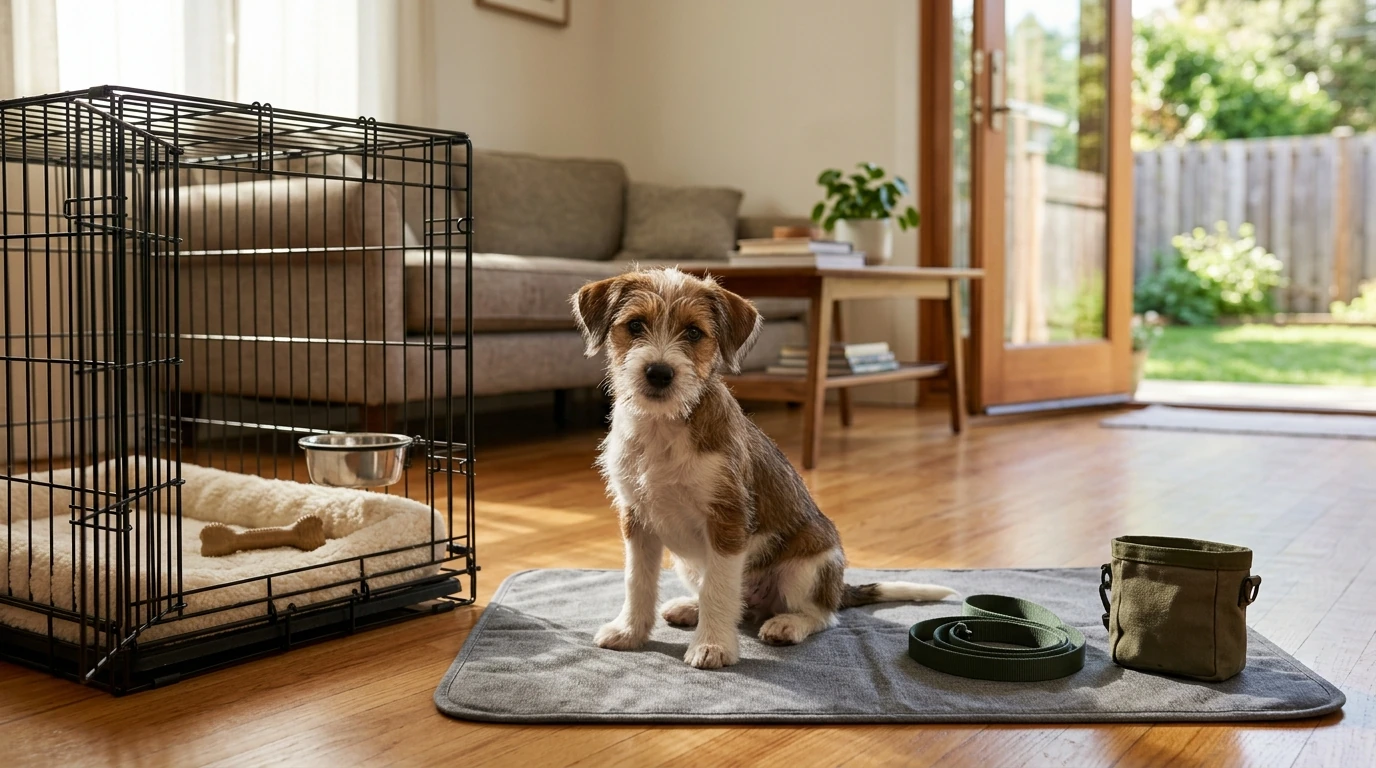
- Create a calm puppy zone with a crate or pen, water, safe chews, and washable bedding to reduce roaming and accidents.
- Decide household rules early (sofa access, sleeping area, feeding location, greeting manners) to avoid mixed signals.
- Plan a predictable daily schedule for meals, naps, potty trips, play, and short training sessions.
The first 48 hours: routine over perfection
The first two days are about building trust and predictability. Think “many short reps,” not “perfect behavior.”
- Use frequent potty trips: after waking, after eating/drinking, after play, and every 30–60 minutes when awake.
- Reward immediately after potty happens outside (treat + calm praise within 1–2 seconds) so your puppy connects the dots.
- Keep freedom limited indoors with a leash, pen, or closed rooms to prevent hidden accidents.
- Start crate comfort with short sessions: toss treats in, let your puppy enter voluntarily, and end before whining escalates.
- Introduce a calm bedtime rhythm: last potty trip, quiet chew, lights low, then sleep.
4-week training roadmap (print and check off daily)
Training goes faster when you focus on a few skills at a time, then “proof” them in slightly harder situations. Keep sessions short (1–3 minutes) and frequent; end on a win and offer a chew or nap afterward.
- Week 1: Build predictability—potty schedule, name response, settling, and gentle handling.
- Week 2: Add foundation cues—sit, touch/target, come (indoors), and leash follow.
- Week 3: Expand real-life skills—leave it, drop it, polite greetings, and longer settle periods.
- Week 4: Proofing—practice cues in new rooms, outdoors at a distance from distractions, and with mild interruptions.
| Week | Daily focus | Potty plan | Training minutes | Socialization goal |
|---|---|---|---|---|
| Week 1 | Schedule, crate comfort, name game | Every 30–60 min awake + after sleep/food/play | 3–6 total (micro-sessions) | Calm exposure to household sounds + handling |
| Week 2 | Sit, touch, come (indoors), leash basics | Gradually extend to 60–90 min when successful | 5–10 total | Meet a few new people; observe traffic at a distance |
| Week 3 | Leave it/drop it, settle, polite greetings | Maintain success; add a cue word before potty | 8–12 total | New surfaces/places; positive carrier or car sessions |
| Week 4 | Proofing cues, impulse control games | Stretch intervals only if accident-free trends | 10–15 total | Short, safe outings; controlled dog sightings |
House training: a simple system that prevents accidents
House training succeeds when your puppy gets lots of chances to be right—and very few chances to practice mistakes.
- Supervise actively or confine: if your eyes can’t be on your puppy, use a crate/pen so accidents don’t happen out of sight.
- Track timing: most puppies need to go shortly after waking, eating, drinking, and energetic play.
- Add one cue: say “go potty” once your puppy is about to go; reward after finishing outside.
- Clean thoroughly: use an enzymatic cleaner for indoor accidents to remove lingering odor cues.
- Skip punishment: if you catch an accident mid-stream, calmly interrupt and take your puppy outside; then reset your schedule.
If you want a science-backed perspective on early habits and humane methods, the Humane Society’s guide to house training a puppy is a solid reference.
Core commands and skills to prioritize
For more foundational cue guidance, the American Kennel Club’s puppy training basics can help you keep your steps clear and consistent.
Socialization that builds confidence (without overwhelming)
The AVSAB position statement on puppy socialization is a helpful, veterinarian-informed resource for balancing disease risk with the behavioral benefits of early positive exposure.
Common setbacks and quick fixes
Printable training eBook: what it includes and how to use it
If you want a ready-made plan you can stick on the fridge, New Puppy Training Starter Guide (Printable 4-Week Routine) organizes the first month into simple daily checklists.
Optional add-ons that can make the routine easier
- Luxurious Plaid Men’s Cashmere Scarf for chilly early-morning potty trips when you’re standing still in the yard.
- Retro Japanese Style Cotton Socks for quick slip-on comfort when you’re running in and out for frequent potty breaks.
FAQ
How often should a new puppy go outside for potty breaks?
Plan on every 30–60 minutes when your puppy is awake at first, plus immediately after waking, eating/drinking, and energetic play. As your puppy stays accident-free, you can gradually extend intervals (often to 60–90 minutes), but individual needs vary by age and routine.
When should basic command training start for a puppy?
Start right away with 1–3 minute sessions a few times a day in a low-distraction space. Prioritize name response, sit, touch (hand target), and a gentle indoor recall game using rewards your puppy loves.
How can socialization be done safely before vaccines are complete?
Follow your veterinarian’s guidance and choose controlled, lower-risk options such as carrying your puppy, visiting clean friends’ homes, and arranging calm meetups with healthy, vaccinated dogs. Avoid high-traffic dog areas (like dog parks) until your vet confirms it’s safe.









Leave a comment